
Workshops:
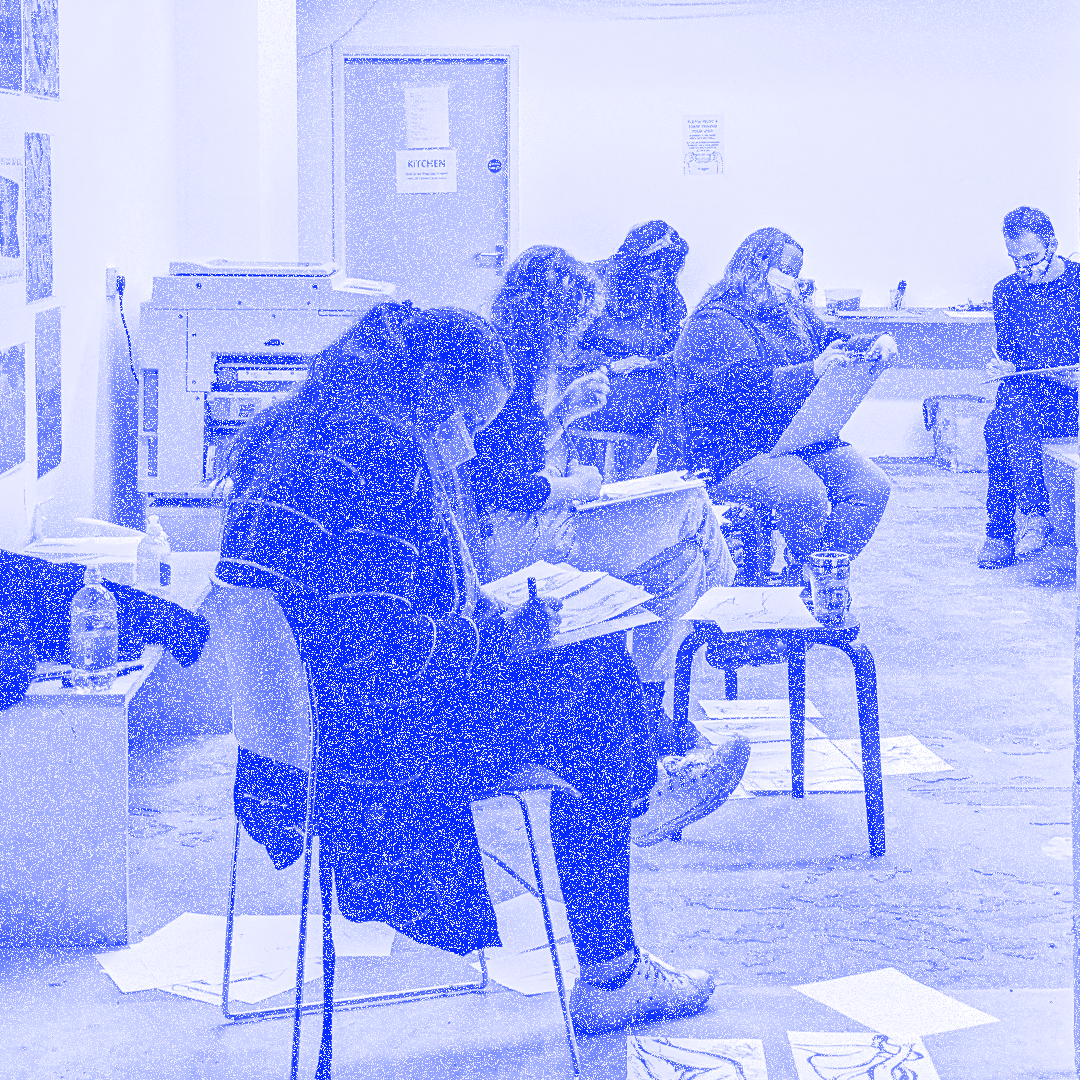
Overlay Press runs monthly workshops click this link to see whats on at the moment. We work along side a different organisations to run engaging and inclusive workshop. Also we can person 1 on 1 session or bespoke team building workshops for you and your colleagues.
History of Risograph
Risograph printing is a printing process that was developed by the Riso Kagaku Corporation of Japan in the 1980s. The process was created as a cheaper and faster alternative to offset printing, which was the dominant printing technology at the time.
The first digital risograph printer was the Riso 007, which was introduced in 1986. It used a stencil-based printing process that involved creating a master sheet for each colour layer of the print. The master sheet was then fed through the printer, which used a cylindrical drum to transfer ink from the master sheet onto the paper.
Risograph printing quickly gained popularity in Japan, where it was used primarily for producing school textbooks and other educational materials. It also became popular among small independent publishers and artists who were attracted to its unique aesthetic and low cost.
In the 1990s, risograph printing began to gain a following in other parts of the world, particularly in Europe and the United States. It was embraced by the zine and DIY publishing communities, who appreciated its low cost and ability to produce high-quality prints with a unique, handmade feel.
Today, risograph printing remains a popular and affordable option for producing zines, posters, art prints, and other small-scale print projects. Its unique aesthetic and eco-friendly materials make it an attractive option for those looking for a low-cost, sustainable printing alternative.
Follow this link for any enquires or questions